|
The pneumatic caisson process was employed
to construct the Plum Beach Lighthouse foundation. This method
of construction was used as the bottom where the lighthouse was
to be built is sand, into which the foundation would need to
penetrate a considerable distance to withstand the overturning
effects of wind and ice.
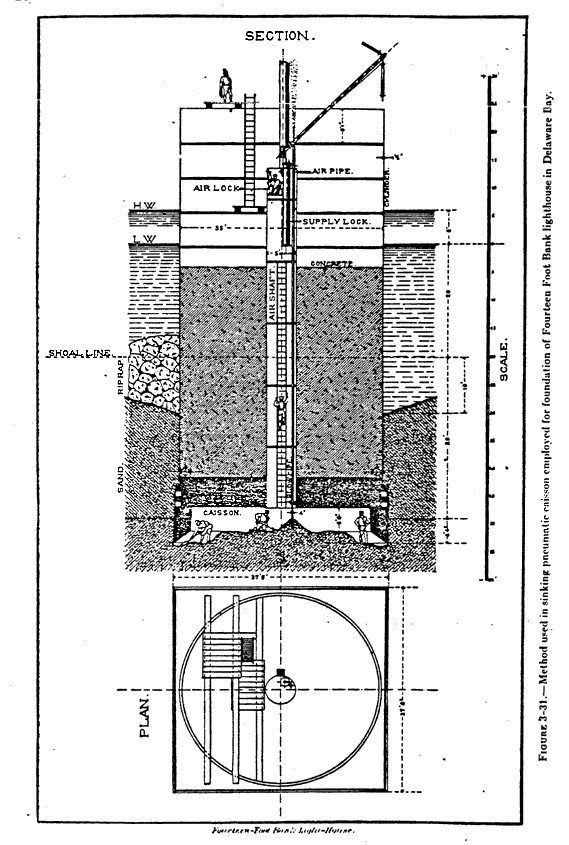
A timber working chamber was built on shore
and launched. On this was placed three courses of a cast iron
cylinder, 35 feet in diameter, built up of plates bolted together
along their flanges. The caisson was towed to the site of the
lighthouse and was sunk in position, by admitting water to the
cylinder. An air shaft with an air lock, through which the men
passed to the working chamber, was erected on the foundation
cylinder and braced to shell plating. Sufficient air pressure
was maintained in the caisson to keep the water out. The excavation
was made in the caisson within the cutting edges, the sand being
blown out through a blow pipe with in the air shaft. In this
manner the caisson was sunk to the desired depth. The space within
the shell plating was filled with concrete as the work progressed.
When sunk to the proper depth, the cylinder was encircled by
riprap to prevent scour. A tower and dwelling was erected on
the cylindrical foundation pier.
Source: "United States Coast Guard Aids to Navigation,
1945"
|