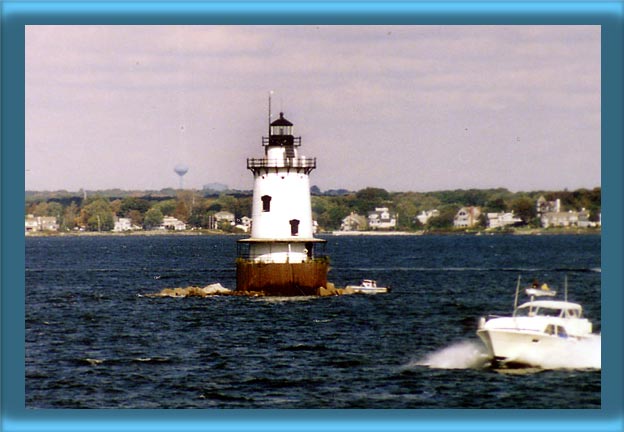
The steamer Perry ran aground on Conimicut Point in February 1863. The spar buoy marking the Point had been moved. When it was reset, it was placed too far west. Another ship, the schooner Hannah went aground on the point in November 1863.
In 1866, a daybeacon was built on the shoal off Conimicut Point at the entrance to the Providence River. During its construction, the Lighthouse Board received a petition, signed by a number of ship owners and captains, asking that a light be added to the tower and the nearby Nayatt Point Lighthouse be discontinued.
A fourth order Fresnel lens placed on the tower was first lighted on November 1, 1868. Nayatt Point Lighthouse was discontinued that day. The new lighthouse did not have a keeper's quarters. The keepers lived at the former Nayatt Point light and rowed nearly a mile to the Conimicut Point Lighthouse.
A five-room keeper's dwelling was built on the lighthouse's landing pier in 1874. It did not last long. In early March of 1875 the Providence River was full of drift ice. On March 4, at five o'clock in the morning drift ice destroyed the keeper's dwelling foundation and high winds pulled it away from the lighthouse. The keeper, Horace Arnold, and his nine year old were in the keeper's dwelling. Arnold tied his son to a mattress and went to the lighthouse to secure what was left of the keeper's dwelling to it so it wasn't carried away. Horace's son was trapped in the damaged keeper's dwelling for three hours until he was rescued by Captain Sutton on the tug Reliance. The keeper's dwelling was destroyed. Horace and his family lost all of their furniture. They moved back to the Nayatt Point keeper's dwelling.
On August 2, 1875 a tragedy occurred at the lighthouse. Arnold and his two sons, seven and nine years old, were at the lighthouse. His youngest son walked off the platform at the top of lighthouse and fell seventeen feet to the stones around the lighthouse. He had a fractured skull and a broken arm, and was taken to Nayatt Point. Dr. Bullock of Warren and Dr. Miller of Providence were called to treat him. They did everything they could, but he died two days later.
The granite tower was replaced with an iron tower in 1883. A lightship was placed near Conimicut Point during the construction of the new lighthouse. The new tower was built with rooms for the keeper and his family. The keeper moved from the Nayatt Point keeper's dwelling to the new lighthouse in 1884.
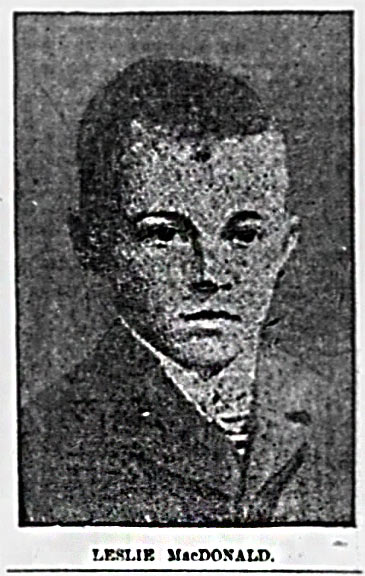
| Leslie McDonald |
|---|
 |
| The Boston Globe (Boston, MA) June 23, Fri |
Thirty years later another Conimicut Lighthouse Keeper, Daniel McDonald, almost lost a son on February 26, 1905. Daniel's sons six year old Leslie and three year old Melton were playing on the rocks around the lighthouse. They were using poles to push at blocks of ice that surrounded the lighthouse. Melton pushed at one of the blocks and his pole slipped. He fell into the icy water. Leslie jumped into the water with his stick. He extended it to his little brother. Melton grasped the end of the stick and was pulled out of the water.
On June 23, 1905 Commodore W.E. Longfellow of the Rhode Island division of the U.S. Volunteer light saving corps went to Conimicut Lighthouse. He presented Leslie a life saving medal and a certificate for saving his brother. Living at a lighthouse was a lonely and isolated life for keepers and their families at offshore stations like Conimicut Lighthouse. In 1922, Keeper Ellsworth Smith and his wife Nellie and their two sons, Russell, a two year old and Robert, a five year old, were living at the lighthouse.
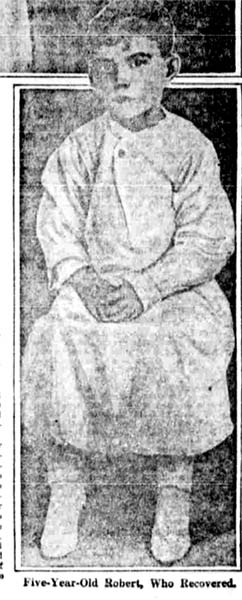
| Robert Ellsworth |
|---|
 |
| Courtesy of Library of Congress |
The isolation was too much for her. She became depressed. She begged her husband to let her leave the lighthouse. She even threatened to kill herself if he didn't let her leave. He refused.
On June ninth, Ellsworth went to Conimicut Village for supplies. In an article in The Morning Tulsa Daily World, Ellsworth said, "When I left Nellie seemed to be happy. She was playing with the children." Nellie found his keys and opened the medicine cabinet and took out some bichloride of mercury tablets. Even thought mercury is highly toxic, a diluted form was used as a medicine. She gave Robert some of the tablets, telling him it was candy. He didn't like the taste of it and tried to spit the tablet out. His mother said, "No, it will be sweeter soon." The poison make him very sick. Nellie put Russell on her lap and gave him some of the tablets. She took him upstairs to his bedroom and laid him on his bed. She went back downstairs and sit at the table with Robert. She took some of the poison tablets and waited.
Ellsworth returned to Conimicut lighthouse at four o'clock with a boat full of supplies. He called out to his wife but no one answered. He knew something wasn't right. In the article he said, "When I mounted the steps I took my time. How could I know what I was to find?" He walked into the kitchen and found Nellie and Robert at the table. He tried to wake her up but couldn't. He lifted her arm above her head and let it go. It dropped. He knew she was dead. Robert was alive but very sick. He went upstairs to the bedroom and found Russell in his bed dead. He rushed Robert ashore to get aid. After he was given an antidote he was taken to Ellsworth's sister's house to recover. The lighthouse remained unlighted that night.
Keepers who have served at Conimicut Lighthouse have reported seeing a ghostly woman or hearing a woman crying and a child laughing. The U.S. Coast Guard Aids to Navigation Teams from Bristol, Rhode Island, who maintain the lighthouse, have also reported hearing a woman crying and a child laughing. Is it Nellie and her son or sounds from the nearby shore? I'll leave that up to you.
The official complement of the Conimicut Lighthouse was four men. This seldom happened. In a June 2003 article in Lighthouse Digest, a teenage Coast Guardsmen named Fred Mikkelsen said, "Most of the time we had a three-man crew and worked six days on and three days off. Many times we ran with a two-man crew and once I was there alone for 37 days." When a relief keeper finally arrived at the end of the 37 day tour, Mikkelsen gave him a cake baked to look like a toilet seat with the words, "Welcome Relief" on it.
In 1960, Conimicut Point Lighthouse was converted to electricity. It was one the last lighthouses in America to be converted. Some sources say the lighthouse was automated in 1966 but in the Lighthouse Digest article Mikkelsen said it was it was automated in 1963.
In 2004 the city of Warwick, Rhode Island acquired Conimicut Lighthouse under the National Historic Lighthouse Preservation Act of 2000(NHLPA). The NHLPA allows the transfer of historic light stations to federal agency tribes, state and local governments, nonprofit corporations, educational agencies and community development groups.
Conimicut Light was transferred to Warwick on September 29, 2004 in a ceremony held at the Elizabeth Buffum Chance Center. Two of the light's former keepers, Fred Mikkelsen and Robert Onosko, were at the ceremony.
On April 9, 2014 Warwick Mayor Scott Avedisian announced plans to seek city council approval to lease Conimicut Lighthouse to New England Lighthouse Tourism and Restoration Company. Nick Korstad, one of the owners of New England Lighthouse Tourism and Restoration Company, wants to restore the lighthouse and open it to tours and overnight stays. He owns Borden Flats Lighthouse in Fall River, Massachusetts, restored it and opened it to tours and overnight stays.
Korstad is prepared to begin restoration immediately once he gets approval. He believes that he and the co-owner of New England Lighthouse Tourism and Restoration Company can do it for about $100,000 by doing much of the work themselves.
Korstad's proposal to lease Conimicut Lighthouse was put on hold. The Warwick City Council said it wanted to explore all options before it signed an agreement with any one group. A request for proposals was issued on October 14, 2014 by Warwick for the renovation, repair, maintenance and operation of Conimicut Lighthouse. The successful bidder would get a minimum ten year lease. They would also have to post a $100,000 performance bond. The proposal failed to attarct any qualifying bids. The performance bond was blamed for the lack of bidders.
The need to restore Conimicut Lighthouse has become critical for Warwick. Even though it owns the lighthouse, Warwick must file regular reports with the National Park Service to prove it is still in compliance with conditions it agreed to when it was deeded the lighthouse. If it isn't the federal government reserves the right to take the lighthouse back
In the June 2, 2014 issue of The Providence Journal, Bonnie Halda, manager of the Preservation Assistance Group for the National Park Service, said “It [the Conimicut light] is still in relatively good condition, so we don't think this delay will jeopardize [the city's ownership]. There hasn't been as much work done as we hoped … but we want to continue to work with the city.”
Warwick issued a new request for proposals for Conimicut Lighthouse on September 2,2015. The performance bond was removed from it. Korstad bid again on Conimicut Lighthouse. Warwick City Council president Joseph Solomon believed he could get a better deal and the plan to lease the lighthouse was dropped. Nothing has been done to restore or maintain it since then.
In April 2021, Rhode Island Congressman James Langevin's office told Warwick's Mayor Frank Picozzi about a $775,000 Federal Economic Development Initiative (EDI) grant to restore Conimicut Lighthouse. It's estimated that it will cost one million dollars to cover the costs of weatherization, painting, railing replacements and window replacements at the lighthouse. The city submitted the application for the grant. The city will find out sometime in May 2021 if they were awarded the grant. Mayor Picozzi stated that if they get the grant, the city will make up the difference between it and the actual cost of the repairs.
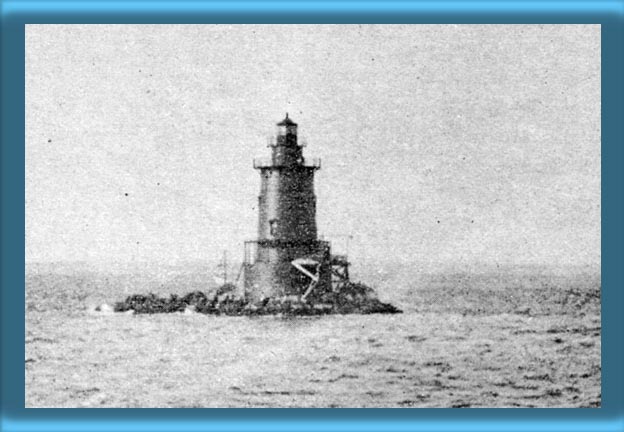
| Conimicut Lighthouse in 1900 |
|---|
 |
| Courtesy of N.L. Stebbins |
| U.S. Lighthouse Society News Wickie from NH The Light Hearted Podcast ep 43 January 20, 2020 Frederick Mikkelsen 1958 - 1961 Former Keeper of Conimicut Lighthouse, RI |
|---|